Open source · GPL-3.0 · Linux (x86_64 + arm64) / macOS (Apple Silicon) / Windows

A portastudio for the desktop.

24 tracks. A fixed signal chain. Everything on one screen. Dusk Studio is a deliberately constrained DAW built to make you stop tweaking and finish music.

v0.12.6 beta

  • 24 tracks
  • 3 banks of 8
  • Fixed signal chain
  • MIDI + soundfonts
  • VST3 · LV2 · AU · CLAP
  • BS.1770 mastering
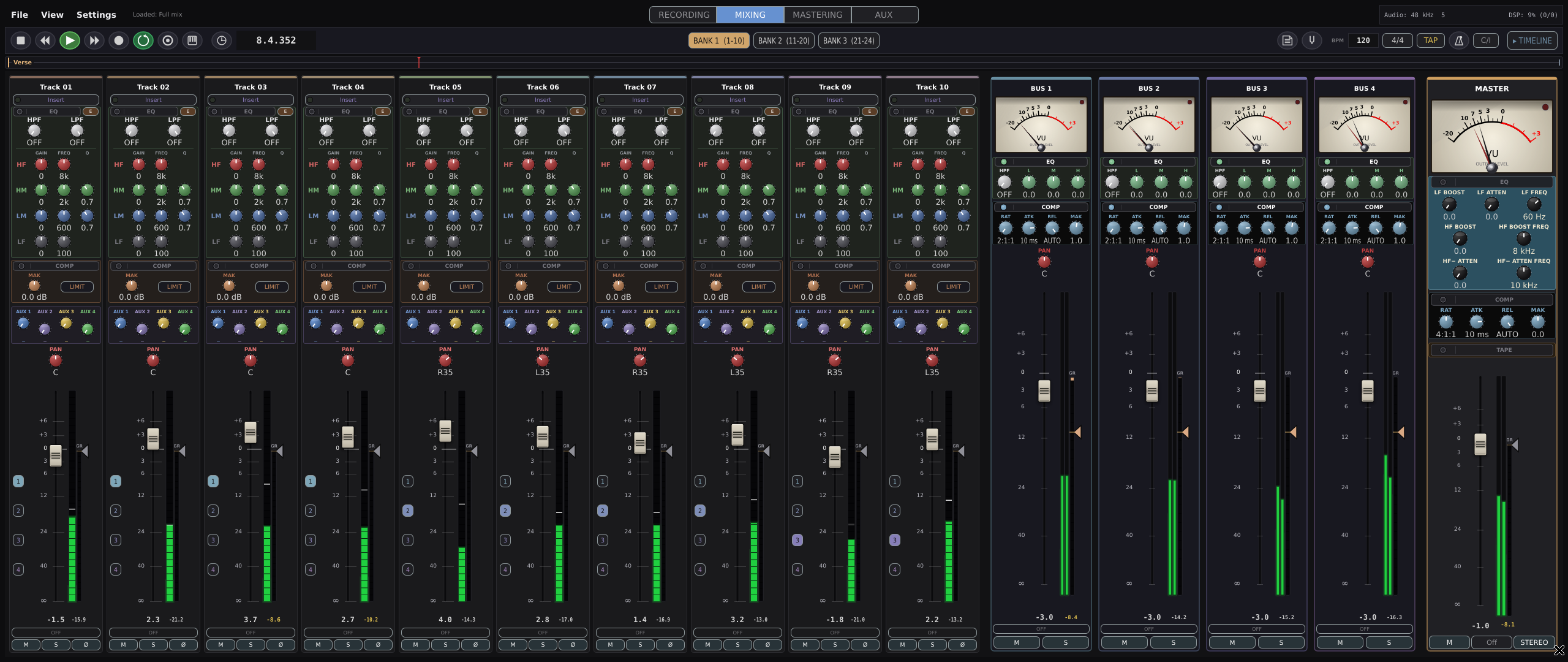
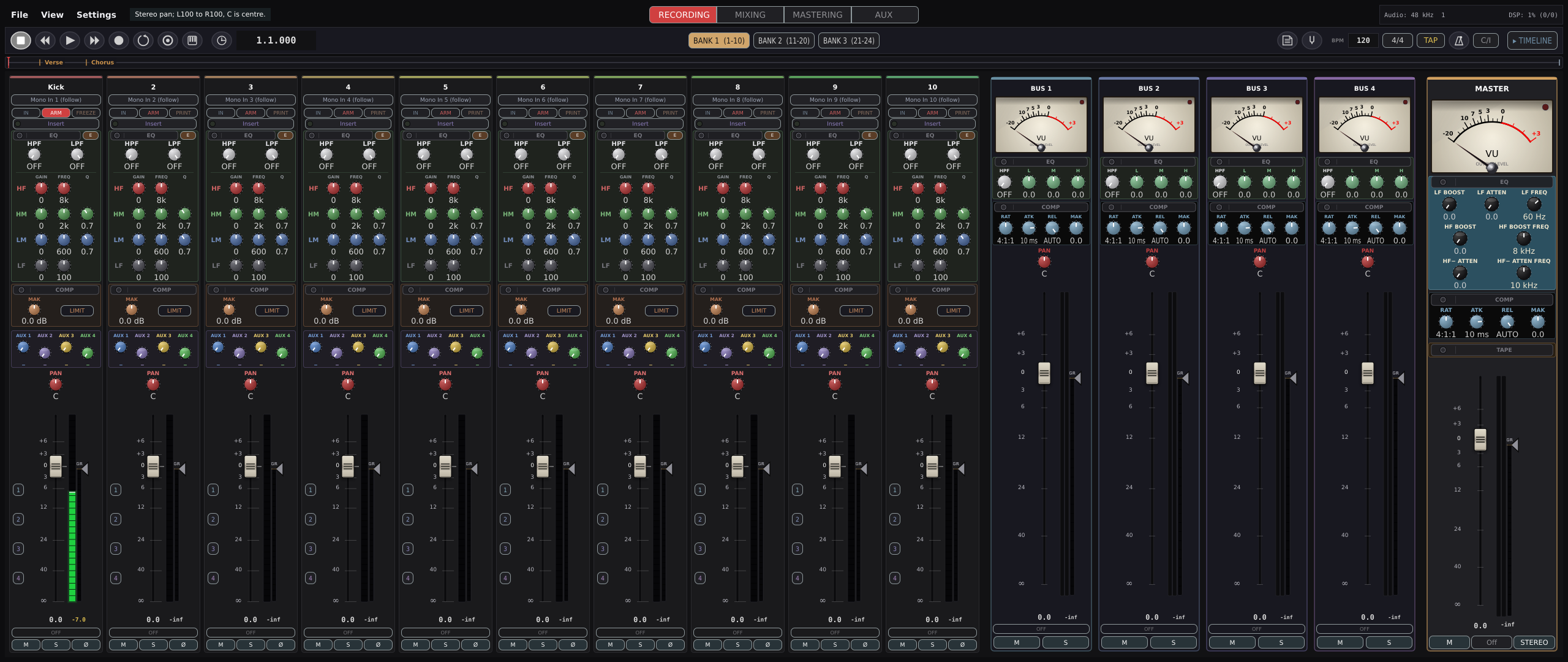
The Dusk Studio console: 24 tracks in three banks of eight with a fixed channel signal chain, shown on one screen.

Record, mix, and master in one place.

No exporting to a second app. The signal chain, the mix, and the master all live in the same window.

Four stages, one page each: RECORDING to track, MIXING for the console, MASTERING for the final pass, AUX for the sends and returns. Within a stage there are no tabs and nothing hidden.

Dusk Studio mixing view: 24 channels across three banks, one insert per channel.
Mixing: 24 channels, one insert each
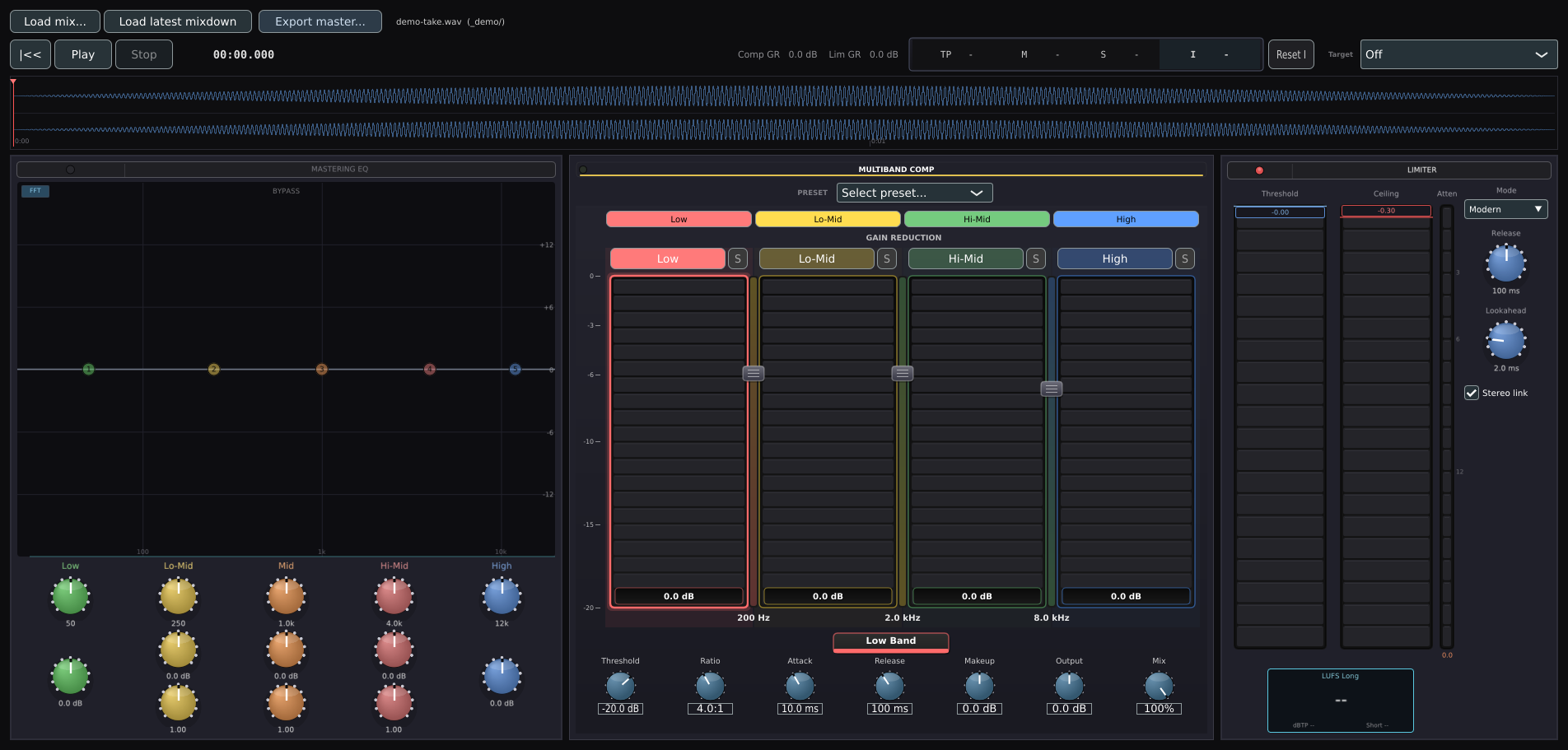
Dusk Studio mastering view: 5-band digital EQ, multiband compressor, brick-wall limiter, BS.1770 metering.
Mastering: 5-band digital EQ, multiband, limiter, BS.1770

In December my Tascam DP-24 died. It helped me finish songs, not because it was powerful, but because it wasn't. Nothing in software felt like that. So I built it.

Read the full story →

Get Dusk Studio

Build it yourself (free)

The source is GPL-3.0 and free forever. Clone it, audit it, build it, modify it.

Source on GitHub

Self-builds get no support tier, but the code is identical.

Get the official build

Back Dusk Studio on Patreon from $1/month and get every beta build (Linux tarball, Windows MSI, macOS DMG) for as long as you're subscribed. New builds land in the patrons-only feed as they ship.

Early backers are credited as Founding Patrons, with your name in the app's About panel.

Get builds on Patreon

One-time and lifetime licenses come later, closer to 1.0. During the beta it's Patreon only.

The source is always free. The paid builds fund development.

It's a beta, built to a production bar. 1.0 is the public stable declaration. Expect rough edges and report everything →

First launch on Mac and Windows

The builds are unsigned by design, so macOS and Windows warn you the first time. On macOS, right-click the app and choose Open. On Windows, click More info, then Run anyway. About 30 seconds, once.

First-launch walkthrough in the manual

System requirements

Three desktop platforms, no exotic hardware. Here's what each one needs.

Linux

PipeWire (recommended) or ALSA. An X11 display is required. On a Wayland desktop that means XWayland, which GNOME and KDE enable by default. Tarballs ship for x86_64 and arm64 (64-bit Raspberry Pi).

macOS

Apple Silicon, delivered as an arm64 DMG. macOS 14.4 (Sonoma) or later for the out-of-process plugin sandbox; older macOS runs plugins in-process.

Windows

Windows 10 or later, installed from an MSI. An ASIO driver is recommended; without one, Dusk Studio falls back to WASAPI exclusive mode.

Any modern multi-core CPU handles a 24-track session at 48 kHz. Multicore DSP is on by default, spreading the channel-strip work across the cores you have.

Changelog

What has landed on the beta line so far.

v0.12.6 25 July 2026

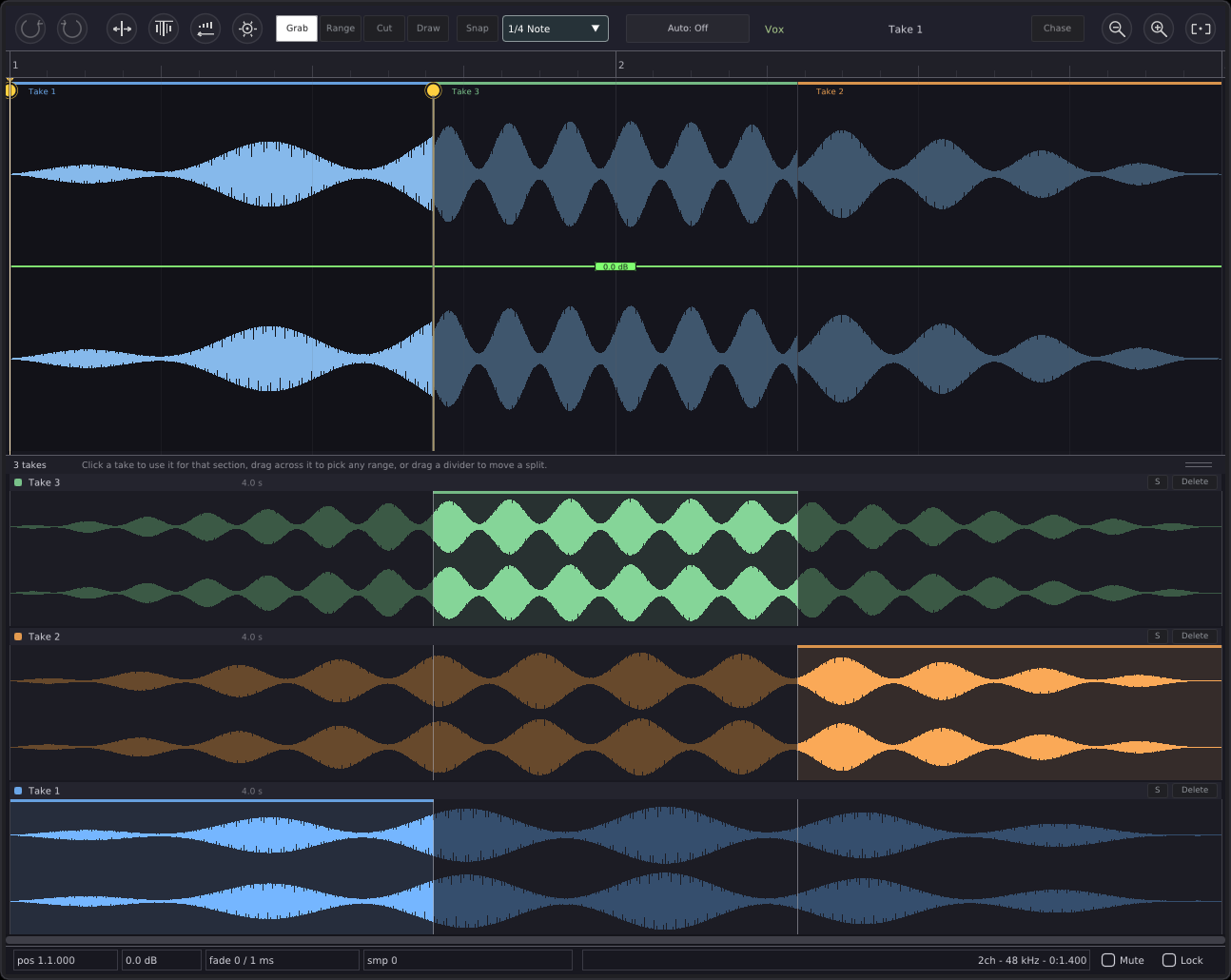
  • Manual recording latency offset in Audio Settings → Advanced, applied to every take at placement, for interfaces that misreport their round-trip latency. A raw-sample readout in the region editor lets a loopback calibration be measured directly.
  • Aux sends on a monitored input now sound during playback, so a vocal tracked with reverb keeps it while playing along (0.12.3); armed instrument and MIDI tracks sound live over the timeline too (0.12.1).
  • Fixed a crash when bouncing, rendering stems, or freezing a track through a CLAP, VST3 or LV2 insert (0.12.2).
  • Multi-preset SoundFonts open in a filterable, program-grouped preset grid instead of one long dropdown (0.12.4).
  • Control-surface faders follow the standard Mackie taper, so a printed 0 means 0.0 dB, and the out-of-process plugin-scan sandbox now actually engages on Windows (0.12.1).

v0.12.0 11 July 2026

  • Native plugin hosting on Linux across CLAP, LV2 and VST3 (effects and instruments alike), with editors that embed reliably on Wayland desktops, automatable and MIDI-learnable parameters, and crash-safe discovery.
  • Sessions remember the sample rate their audio was made at and switch the device to match on open, warning loudly when they can't.
  • Mastering delivery presets: 24-bit WAV at the session rate, 16-bit 44.1 kHz WAV with TPDF dither, or 320 kbps MP3.
  • Save As now copies every session-owned file into the new folder instead of silently referencing the old one; loop playback is seamless; latent plugins on an aux return no longer flam against the dry mix.
  • The channel and bus EQ moved to the new-generation console core: a subtle, deliberate re-voicing at 10 to 20% less CPU on the EQ/compressor path.

v0.11.0 22 June 2026

  • MP3 bounce and master export at 320 kbps. WAV stays the default, and stems stay WAV so they re-import sample-aligned.
  • Import DP Song (experimental): reads a raw TASCAM DP-24 / DP-24SD / DP-32 song folder off the SD card and rebuilds the session, with recovered clip positions, mixer recall, tempo and markers.
  • The mastering limiter was rebuilt as a true-peak brick-wall limiter, joined by an FFT spectrum overlay on the mastering EQ and DP-24-style multiband compressor presets.
  • A Multicore DSP setting, a Dusk-native audio device selector, and a piecewise tempo map for songs that change tempo.
  • 0.11.1 added chase / follow playhead, a bar-and-beat grid in the region editors, and a Raspberry Pi (arm64) Linux tarball.

v0.10.0-beta.1 29 May 2026 (first beta)

  • The first beta, after an architectural-audit sprint over every working feature: real-time safety, lifecycle correctness, cross-platform CI, documentation parity. 148 Catch2 tests green on Linux (amd64 + arm64), macOS and Windows.
  • Plugin scanning moved out of process, so a plugin that crashes or hangs during discovery is blacklisted instead of taking the app down.
  • Ten new MIDI binding targets (per-track EQ and compressor toggles, bus EQ, master Pultec and bus compressor), with bank-relative variants that keep an 8-fader surface useful across 24 tracks.
  • Accessibility pass: every channel-strip slider reads its name and value to VoiceOver and Orca, and text-input dialogs render inside the main window.
  • Hot-unplug detection: an interface disappearing stops the transport and says so, leaving the session intact in memory and on disk.

Full changelog on GitHub →

24 tracks, fixed.

Three banks of 8, mapped to real control surfaces.

One insert per channel.

Never a chain.

Everything visible.

No tabs, no hidden panels, no preferences sprawl.

The constraints are the product.

Linux first

Built primarily for the Linux audio community, where quality free tools are especially needed. Also on Windows and macOS.

No strings attached

No trials, no feature limitations, no nag screens, no accounts required. Download, install, and create.

Get notified when new builds drop

New Dusk Studio builds and plugins. No spam, a couple of emails a month, tops.